

Winter weather in Greater Boston is relentless, and your roof feels it more than any other part of your home. Snow accumulation, ice buildup, freezing temperatures, and sudden thaws can expose roof weaknesses that go unnoticed during the rest of the year. What starts as a minor problem can quickly turn into serious winter roof damage if left untreated.
O’LYN Roofing in Norwood, MA, wants to help our customers learn the warning signs of common mid-winter roof problems. Knowing these signs can help you act quickly, limit damage, and avoid costly repairs. Below are the most frequent winter roof issues in the Boston area and the signs you should never ignore.
How Greater Boston Winter Weather Damages Roof Systems
Roofs across New England face constant expansion and contraction throughout winter. Daytime melting followed by overnight refreezing puts stress on shingles, flashing, and roof decking. Coastal storms bring high winds and heavy precipitation, while snow loads add significant weight. Ice buildup can lead to drainage issues that could cause leaks inside your home by allowing water to seep under the shingles and into the decking.
Drainage plays a critical role in how well a roof holds up during winter conditions. As snow melts during brief warm periods, water must drain off the roof to prevent moisture buildup. When drainage paths along the roof edges become compromised, water can pool and refreeze.
This process accelerates winter roof damage and often leads to leaks that only appear during snowmelt rather than rain.
Even well-installed roofing systems can struggle if ventilation, insulation, and drainage systems do not perform well. That is why winter often reveals roofing problems that stay hidden during fall.
Ice Dams and What They Mean for Your Roof
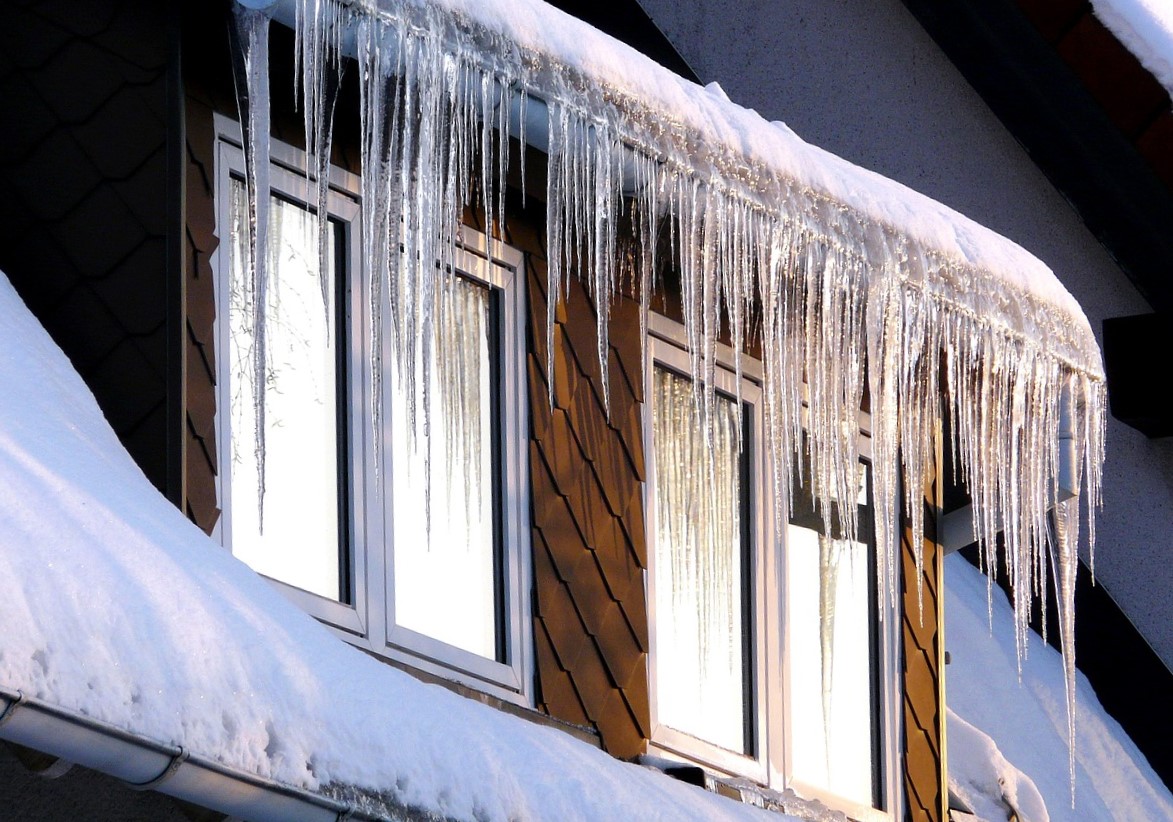
Few winter issues are as common or as destructive as ice dams in Boston. Ice dams form when heat escapes through the attic, melting snow on the roof. As that water reaches the colder roof edge, it refreezes, creating a dam that traps additional meltwater behind it.
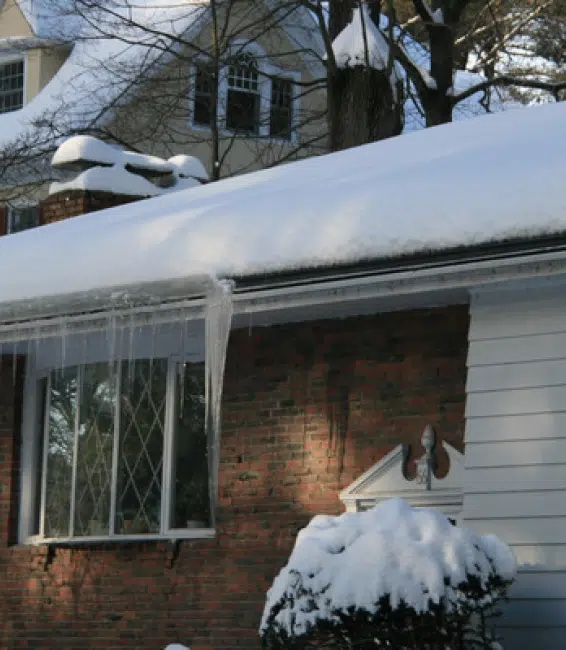
Over time, trapped water can work its way under shingles and into your home. Many homeowners first notice ice dams when icicles form in neat rows along the eaves or when water stains appear on ceilings near exterior walls.
Ice dams are not just a surface problem. They often signal underlying insulation or ventilation issues that allow heat to escape unevenly.
Signs Your Roof May Be Leaking (Even If You Don’t See Water Yet)
Winter roof leaks frequently catch homeowners off guard. A roof that seemed fine in the fall may suddenly begin leaking once snow and ice settle in. This often happens around flashing, chimneys, skylights, vents, and roof valleys, where materials are most vulnerable to temperature changes.
Common roof leak warning signs include ceiling stains, damp insulation, slow drips during snowmelt, or musty smells near attic spaces. Peeling paint, bubbling drywall, and attic moisture are also indicators.
Even small leaks can worsen quickly in winter as water freezes, expands, and widens gaps. Prompt professional roof leak repair is essential during the winter months to prevent structural damage and interior moisture issues.
Winter Wind Damage and Loose Roofing Materials
Cold temperatures make asphalt shingles more brittle, increasing the risk of cracking or breakage. Winter storms or strong winds, common in Greater Boston, can also lift shingles or tear them away completely.
Shingle damage is often visible as curling edges, uneven roof lines, or dark patches where there are missing shingles. Granules collecting in gutters after storms can also indicate increased wear.
You may also notice exposed underlayment or damaged flashings around chimneys, skylights, and vents. Once damage occurs, high winds create further issues after repeated winter storms.
Once shingles become compromised, the layers beneath them become exposed to moisture, significantly increasing the risk of winter roof damage. O’LYN Roofing can help you determine if your roof needs immediate repairs after we perform an inspection.
Wind and ice do not just affect shingles; they also impact roof drainage, which can cause gutter damage. Gutters play a crucial role in winter roof performance. When gutters become clogged, damaged, or frozen solid, melting snow cannot drain properly. This can cause water to back up under shingles or spill down siding and into foundations.
Upgrading or repairing gutters before winter or during early signs of trouble can help prevent recurring mid-winter roof problems. Professional gutter installation ensures proper slope, secure attachment, and reliable drainage during freeze-thaw cycles.
Attic Ventilation and Insulation Problems That Trigger Winter Roof Issues
Many winter roofing issues originate inside the home. Poor attic ventilation allows warm, moist air to begin to accumulate, increasing the likelihood of ice dams, moisture, and mold problems.
Heat loss through the attic can cause uneven snow and ice melt, leading to a recurring freeze-thaw cycle that traps moisture in your roofing materials. Proper insulation and sealing help resolve these issues and protect your roof and home.
Signs of attic-related roof issues include frost forming on rafters or nails, damp insulation, mold odors, or uneven snow melt patterns on the roof. Over time, trapped moisture can weaken the roof decking and shorten the lifespan of your entire roofing system. Balanced ventilation helps regulate attic temperatures and reduce moisture buildup, which is critical during New England winters.
Protect Your Home Before a Small Roof Issue Becomes a Major Repair
Winter conditions make it harder for homeowners to assess roof damage on their own, which is why professional inspections are especially important during colder months. In many cases, roof problems only become visible once snow melts or ice begins to shift, allowing water to find its way inside.
You should schedule a winter roof inspection after major snowstorms, ice events, or periods of rapid temperature change. These conditions can loosen shingles, stress flashing, and worsen small openings that were not an issue before. You should also schedule a roof inspection if leaks appear only during snowmelt. This can point to ice dam formation, blocked drainage, or flashing failure rather than surface damage.
Repeated ice dams forming in the same areas are another clear sign you need a closer roof evaluation. This pattern usually indicates underlying insulation or ventilation issues that you cannot resolve with ice removal alone.
A professional winter inspection helps identify hidden problems before they worsen and become more damaging. A timely roof inspection allows for targeted leak repairs that protect your roof’s structure, interior spaces, and the long-term performance of your roofing system. Addressing problems early helps preserve the long-term value and performance of your roof.
O’LYN Roofing understands the unique challenges New England winters create. With extensive experience throughout Greater Boston, our team knows how to identify hidden winter roof damage and provide solutions that last. We install and maintain roofs to protect our customers’ homes. Our experienced team also performs roof inspections to check for damage.
Contact O’LYN Roofing today to schedule a roof inspection to discover mid-winter roof problems in Greater Boston.